Troutdale industrial buildings near the Troutdale Reynolds Industrial Park often feature long runs of sheet-metal ductwork installed decades ago. Warm dry summers pull fine Columbia Gorge dust through intakes while mild wet winters create condensation points where moisture mixes with manufacturing residues. Technicians must account for these cycles when selecting agitation tools and negative-air machines to avoid pushing contaminants into occupied production zones.
Facilities in East Troutdale and along the Historic Downtown corridor frequently sit on older concrete pads with limited roof access. This layout forces crews to stage equipment on the ground and run extended hoses, increasing the time needed to reach every branch and turning vane. Skipping these turns leaves settled grease and metal shavings that later re-entrain during high-volume exhaust cycles.
Multnomah County buildings near Gresham and Fairview borders commonly combine office HVAC with process exhaust. Cross-contamination risks rise when return air paths sit within twenty feet of paint booths or wood shops. Proper isolation dampers and separate HEPA filtration trains are required before any vacuuming begins.
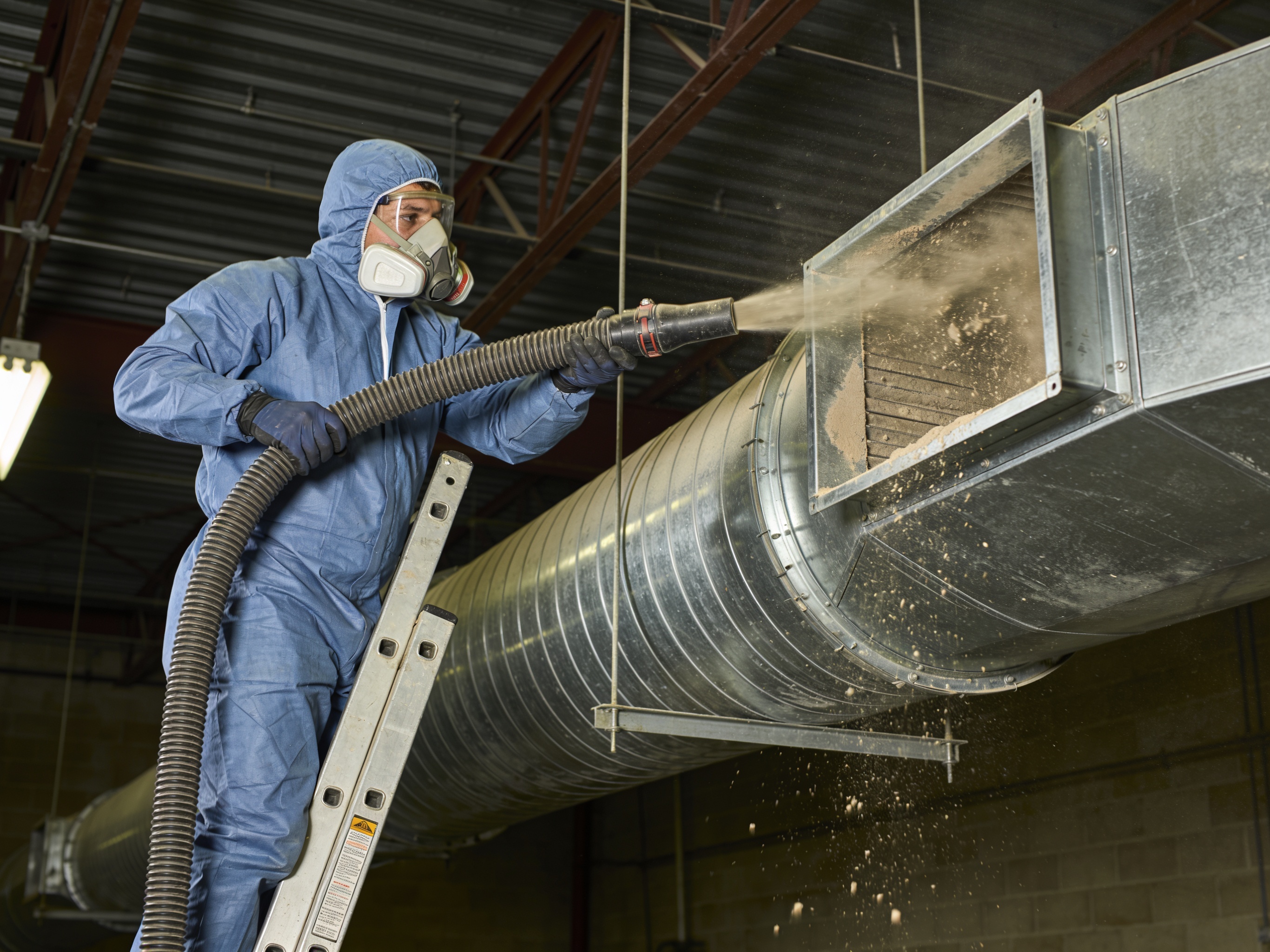
Post-clean verification includes traversing each main trunk with a lighted borescope to confirm removal of visible debris down to the branch level. This step prevents callbacks when production restarts and airflow increases.
Technician insight
In Troutdale the thing that catches most people out with industrial air duct cleaning is the Columbia River Gorge wind pushing fine dust into unsealed intakes on older metal buildings along the industrial park; if you skip sealing those intakes before extraction the same dust settles right back in once fans restart.
Blocked exhaust at East Troutdale fabrication shop
Production stopped when sawdust built up in a 24-inch trunk serving three CNC machines. Inspection revealed the line had never been accessed since the 1990s build-out. Crews added two new access doors, extracted the compacted material, and restored full airflow without halting the second shift.
Industrial Air Duct Cleaning Services We Offer
✓Industrial Ductwork Inspection
On-site mapping of trunk lines and branches in Troutdale warehouses to locate access points and hidden dampers before cleaning begins.
✓Heavy Particulate and Dust Removal
Negative-air extraction combined with mechanical agitation to clear Columbia Gorge silt and manufacturing fines from large-diameter ducts.
✓Process Grease and Oil Extraction
Solvent-free degreasing of exhaust runs serving equipment in the Troutdale Reynolds Industrial Park without shutting down adjacent lines.
✓Post-Construction Duct Cleaning
Final pass through new or renovated industrial spaces to remove drywall dust and metal shavings before occupancy in East Troutdale facilities.
✓Emergency Industrial Duct Service
24/7 response for sudden blockages or odor events at plants near Glenn Otto Community Park and the Columbia River.
Industrial Air Duct Cleaning Cost in Troutdale, OR
| Service | Typical Range | What Affects It |
|---|---|---|
| Small warehouse under 10,000 sq ft | $1,200–$2,800 | Fewer branches and ground-level access lower labor hours. |
| Mid-size manufacturing plant | $3,000–$6,500 | Multiple exhaust systems and roof-mounted units increase time. |
| Emergency after-hours response | $1,800–$3,500 | Added for nights or weekends in 24/7 facilities. |
Ranges are typical for Troutdale, OR and confirmed with an exact written quote before any work starts.
How it works
- 1
Site Assessment
Walk the facility to identify duct routes, access doors, and production constraints specific to Troutdale industrial layouts.
- 2
Isolation And Containment
Install temporary barriers and separate negative-air zones to protect active work areas from cross-contamination.
- 3
Agitation And Extraction
Use whips, brushes, and compressed-air tools while drawing debris into truck-mounted HEPA units positioned outside.
- 4
Verification And Documentation
Borescope inspection of cleaned sections followed by a written report noting any remaining access limitations.
Pricing
Cost depends on duct length, number of access points, and whether production must continue during work.