
2026-09-07 · Sam Keller
How Oregon Spring Pollen Gets Trapped in Troutdale Home Ducts
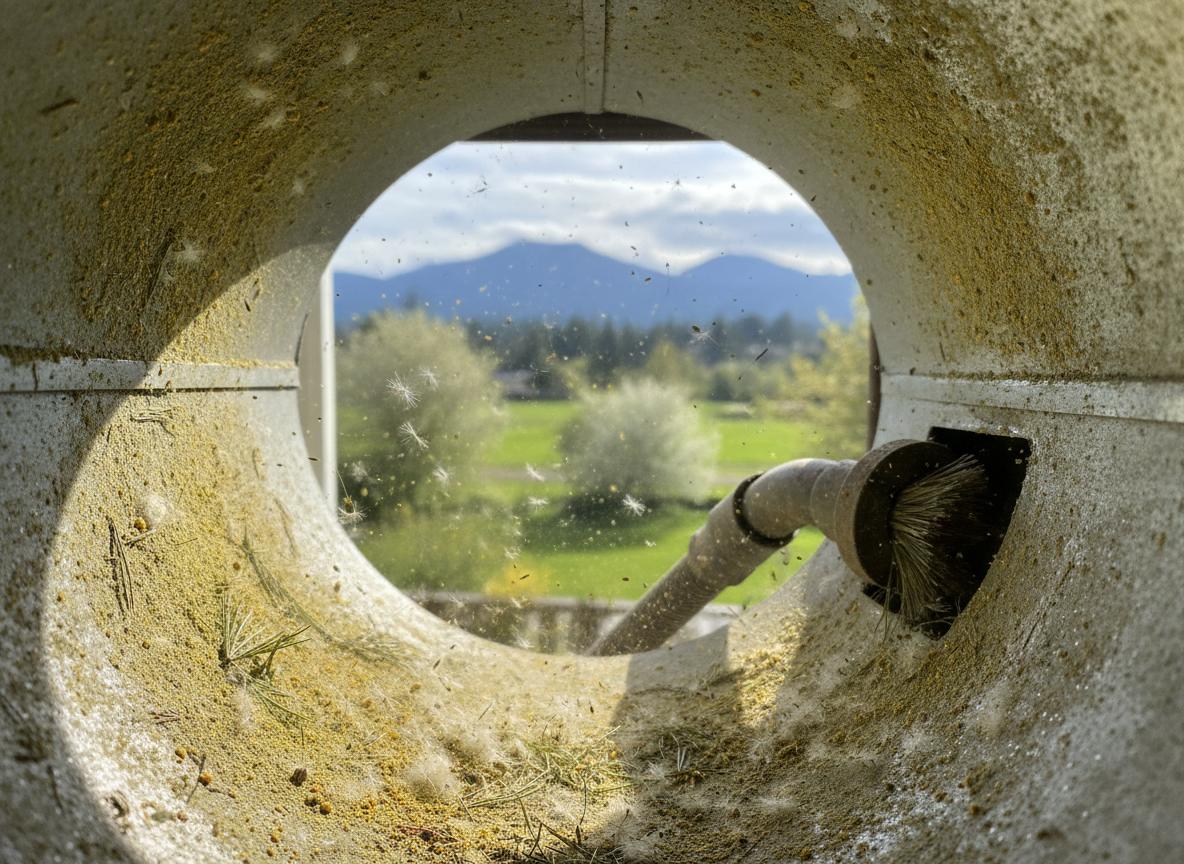
Troutdale spring pollen enters home ducts mainly through the return air intake when residents open windows during the shift from wet winters to warm dry summers, allowing 4-8 weeks of tree and grass pollen to bypass standard filters and lodge in supply lines.
Pollen Sources Around Historic Downtown Troutdale and East Troutdale
Multnomah County experiences heavy spring pollen loads from native trees and grasses that line the Columbia River Gorge and open spaces near Glenn Otto Community Park. Homes in Historic Downtown Troutdale often date to the mid-20th century with original ductwork that has seams and joints allowing fine particles to settle on interior surfaces. East Troutdale neighborhoods built closer to Troutdale Reynolds Industrial Park see additional wind patterns that carry pollen from open fields directly into attic and crawlspace intakes. These local conditions differ from nearby Gresham or Wood Village because Troutdale sits at the Gorge entrance where gusts increase during afternoon warming. Older single-story ranch homes common here have longer horizontal runs that trap pollen before it reaches the furnace filter.
How Troutdale Climate and Terrain Move Pollen into Ducts
Mild wet winters keep windows closed and HVAC systems in recirculation mode, but the switch to warm dry summers prompts residents to open windows and increase fresh-air intake. Columbia River Gorge winds accelerate this movement, pushing pollen through exterior vents and into return ducts within minutes during peak afternoon gusts. In homes near Multnomah Falls access roads, elevation changes create micro-drafts that pull airborne particles downward into basement or crawlspace duct sections. Standard 1-inch fiberglass filters capture only larger grains, leaving smaller pollen to travel 20-30 feet through supply lines before depositing on metal walls. This pattern repeats each year from late March through early June when local counts peak.
Why Pollen Stays Trapped in Residential Systems
Duct interiors develop a thin film from normal household dust that acts like adhesive for incoming pollen grains. In Fairview and Gresham border homes, shared wind corridors with Troutdale carry the same pollen load but older flexible duct sections sag and create low spots where particles collect. Without regular agitation or vacuuming, these deposits remain for multiple seasons and mix with summer wildfire residue referenced in related coverage of Columbia River Gorge conditions. The result is reduced airflow and higher concentrations near bedroom and living-room registers where residents spend the most time.
Practical Steps Homeowners Can Take This Season
Inspect and replace the furnace filter every 30 days during peak pollen months rather than the usual 90-day schedule. Seal obvious gaps around return-air grilles in attics or crawlspaces with foil tape to limit new entry points. Schedule a full indoor air quality services visit if registers show visible dust rings or if airflow feels weaker than last summer. Homeowners in Wood Village and Fairview facing similar Gorge winds often combine this with the steps outlined in coverage of winter moisture and mold risks in Troutdale crawlspace ducts to address year-round buildup. These actions reduce the amount of pollen that reaches living spaces without requiring full system replacement.